From Likes to Revenue: How Brands Master Social Commerce in 2026
Scrolling is no longer a passive activity. In 2026, your Instagram feed, TikTok For You page, and Pinterest board are basically fully integrated storefronts. Concurrently, social commerce, the convergence of social media and e-commerce, has matured from an experimental feature into a primary revenue channel for brands of every size, across every continent.
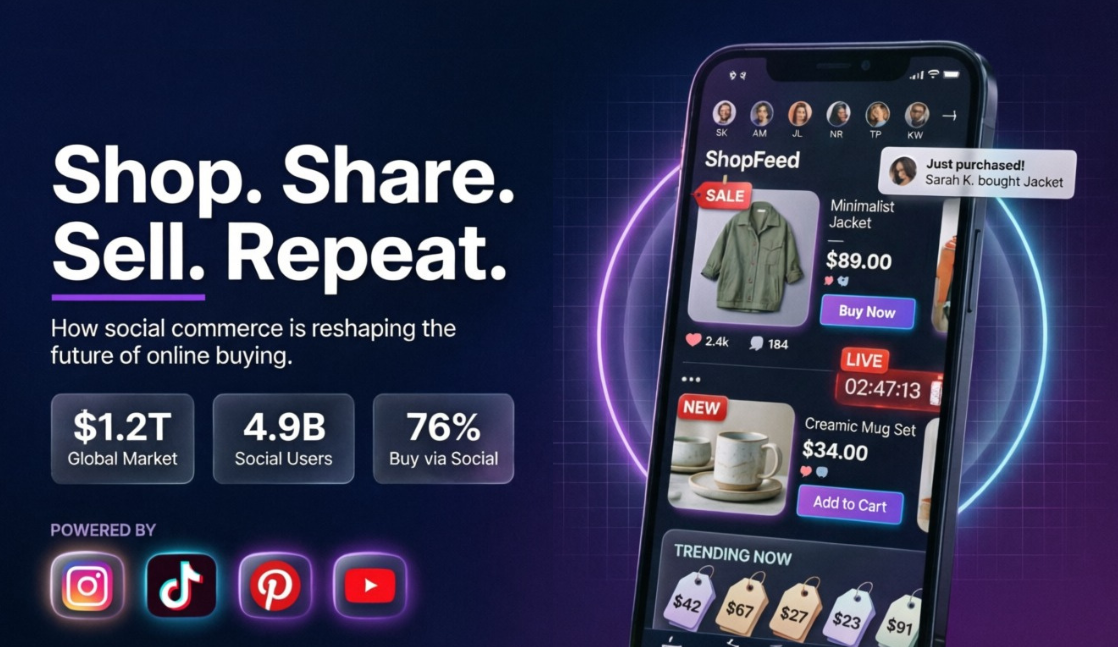
Global social commerce sales are projected to surpass $1.2 trillion in 2026, driven by in-app checkout, live shopping, AI-powered personalisation, and creator-commerce ecosystems. If your brand isn’t treating its social media presence as a direct revenue engine, then you’re leaving significant money on the table. Here’s everything you need to know about social commerce in 2026 and how to build a strategy that converts.
What Is Social Commerce in 2026?
Social commerce refers to the end-to-end purchase journey happening entirely within social media platforms from product discovery in a feed post or live video, to checkout, without the user ever leaving the app. The keyword is ‘entirely’. The friction of redirecting users to external websites has been largely eliminated on platforms like TikTok Shop, Instagram Shopping, Pinterest Shopping, and YouTube Shopping.
This frictionless experience dramatically increases impulse purchase rates. When discovery and purchase happen in the same moment, conversion rates can be 3-5x higher than traditional e-commerce pathways.
The Platforms Driving Social Commerce Growth
TikTok Shop
TikTok Shop has become the dominant social commerce platform globally, particularly among Gen Z and Millennials. With in-video product tagging, affiliate creator programmes, and 24/7 live shopping streams, TikTok Shop has replicated and in many markets, surpassed the success of China’s Douyin commerce model. Brands that crack TikTok’s algorithm-creator-commerce flywheel are seeing explosive growth.
Instagram & Facebook Shops
Meta’s commerce infrastructure spans both Instagram and Facebook, offering sophisticated product catalogues, Reels shopping tags, and WhatsApp checkout integration critical for markets in Brazil, India, and Southeast Asia where WhatsApp commerce is booming.
YouTube Shopping
YouTube’s integration of Google Merchant Center with in-video product shelves has made it a powerful long-form social commerce channel. Product review videos, unboxings, and tutorials now have direct purchase links, turning organic discovery content into bottom-of-funnel revenue.
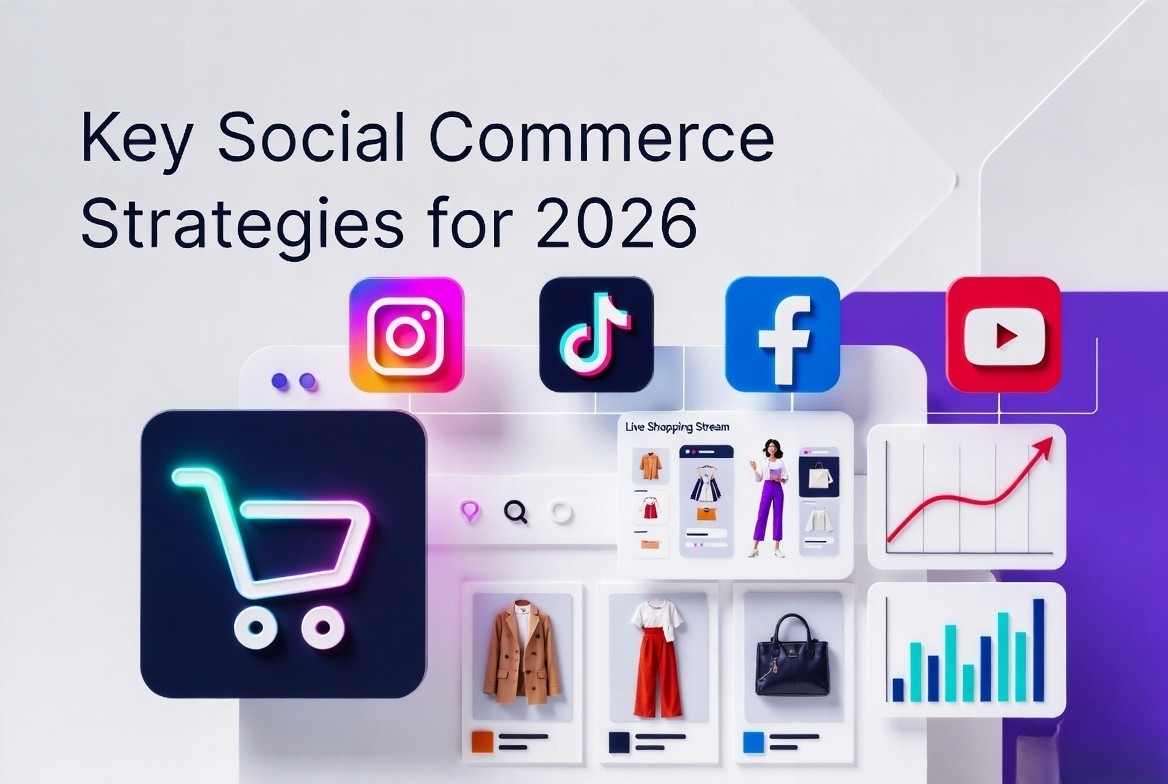
Key Social Commerce Strategies for 2026
Creator Commerce and Affiliate Ecosystems
The most effective social commerce in 2026 doesn’t come from brand accounts, it comes from trusted creators with highly engaged niche audiences. Structuring an affiliate programme where micro-creators (10K-200K followers) earn commission on direct sales is often more ROI-positive than traditional influencer sponsorships. Authenticity drives conversion; a genuine recommendation from a trusted voice outperforms polished brand advertising consistently.
Live Shopping Events
Live shopping, real-time video streams where hosts showcase products and viewers can purchase instantly, has moved from novelty to mainstream in Western markets after years of dominance in China. Brands hosting regular live shopping events build community, urgency, and repeat purchase behaviour simultaneously. The key metrics to track: peak concurrent viewers, add-to-cart rate during stream, and post-stream conversion within 48 hours.
AI-Powered Product Discovery
Platforms are using AI to hyper-personalise which products appear in each user’s feed based on behaviour, search history, engagement patterns, and even visual preference signals. Brands that optimise their product listings with detailed descriptions, rich imagery, and keyword-aligned titles benefit disproportionately from AI-driven feed placement. Think of your product catalogue as a search engine optimisation exercise.
User-Generated Content as a Commerce Signal
UGC customer reviews, unboxings, styling posts, and how-to videos are the most trusted form of social proof in 2026. Actively encouraging, curating, and resharing UGC from customers creates a virtuous commerce cycle: authentic content drives discovery, which drives purchase, which creates more UGC. Build UGC incentive programmes into your post-purchase flow.
Global Social Commerce: Market-Specific Nuances
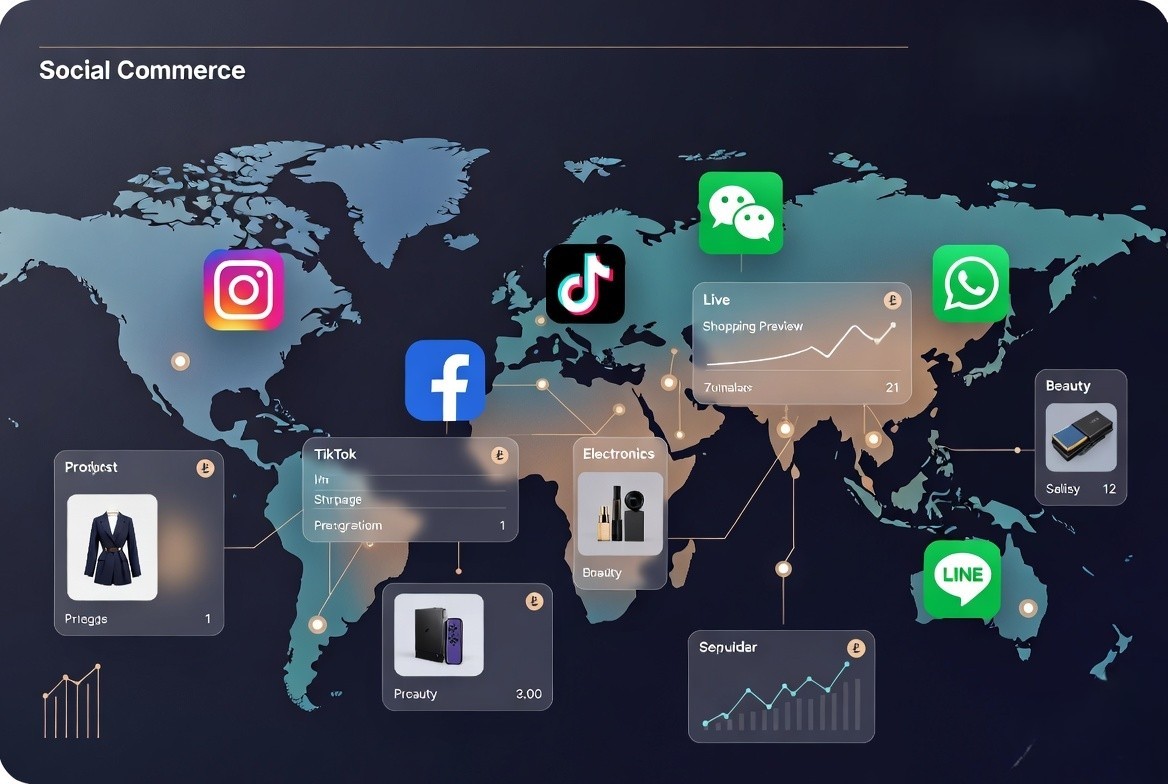
Social commerce is not one-size-fits-all globally. Southeast Asia (via Shopee, Lazada, and TikTok Shop) operates on flash sale and gamification models. In the Middle East and Africa, WhatsApp catalogue commerce dominates for SMBs. In Europe, data privacy regulations shape how platforms can personalise feeds. Understanding your target market’s preferred platform, payment method, and cultural commerce norms is essential for global expansion.
Measuring Social Commerce Success:
- Social commerce revenue as a % of total e-commerce revenue
- Cost per social commerce acquisition vs paid search acquisition
- Live shopping stream: peak viewers, conversion rate, AOV (Average Order Value)
- Creator affiliate programme: GMV (Gross Merchandise Value) per creator, ROI
- UGC volume and engagement rate on product-tagged posts
The Bottom Line
Social commerce in 2026 rewards brands that think like media companies: producing consistent, value-driven, platform-native content while making it easy to buy. The feed is the store. Treat it accordingly.
Take Action on Your Social Commerce Strategy Today
Ready to transform your social commerce? Explore how Adsarge can help you build a data-driven digital marketing strategy that delivers measurable results.